

Posts belonging to Category Daniel


Daniel’s Main Themes

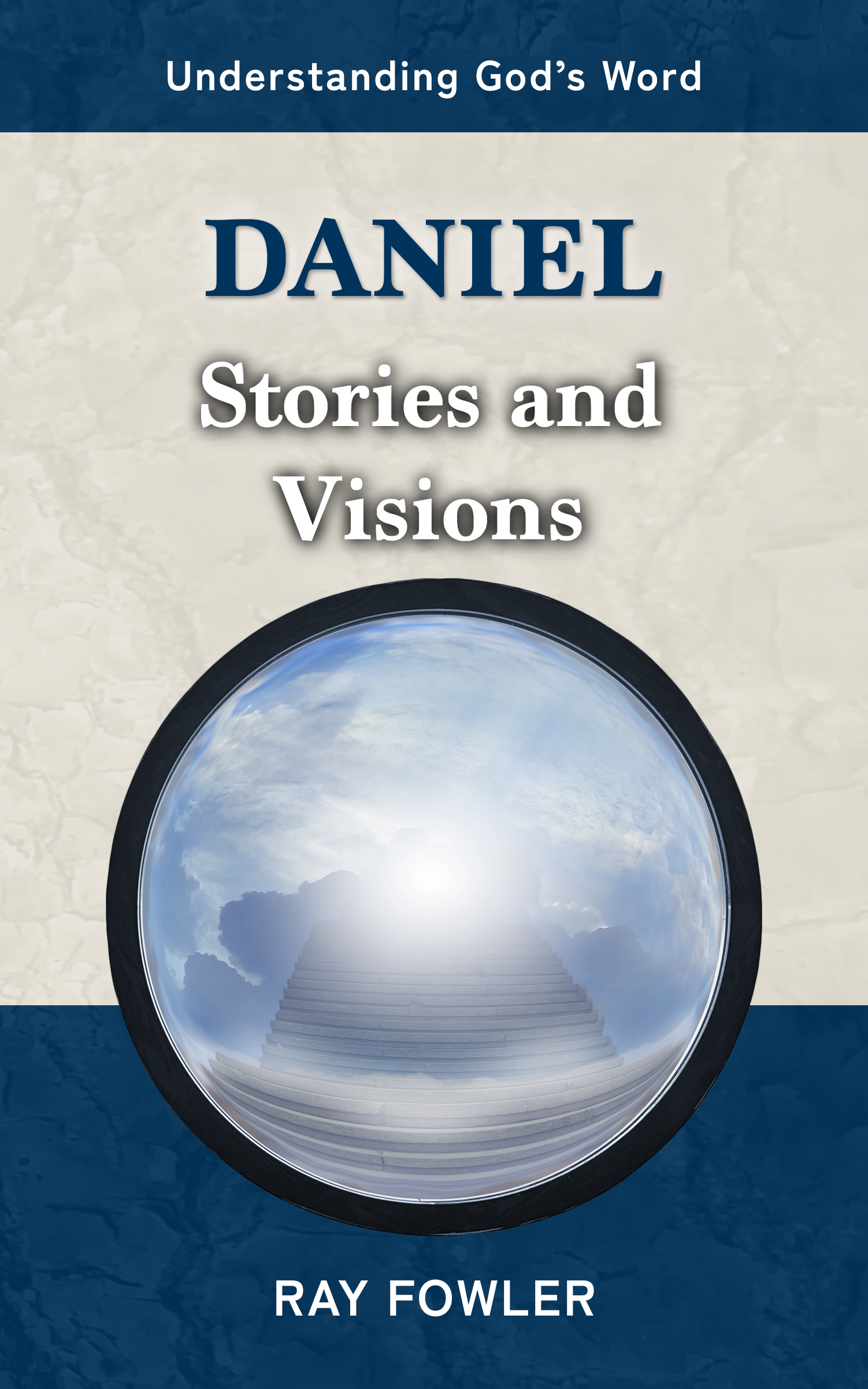
To celebrate the release of my new book, Daniel: Stories and Visions, I am sharing portions from the first chapter this week.

——————————–

Daniel’s Main Themes

We’ve looked at Daniel’s structure, history and genre. Finally, let’s close by looking at some of Daniel’s main themes. There are three main themes we find throughout the book of Daniel.

1) God’s sovereignty over nations and individuals

The first theme is God’s sovereignty over nations and individuals. You may remember the theme verse we read at the beginning of the message this morning, where Daniel praised the God of heaven and said: “Praise be to the name of God for ever and ever; wisdom and power are his. He changes times and seasons; he sets up kings and deposes them. He gives wisdom to the wise and knowledge to the discerning” (Dan. 2:20-21). God’s sovereignty over nations and individuals is a major theme throughout the book of Daniel.

2) God’s coming kingdom, which will never fail

Another important theme is God’s coming kingdom, which will never fail. We see this especially in the various visions in the book, which contrast the worldly empires that come and go with God’s kingdom, which rules forever.

3) Godly living in ungodly times

And then a final important theme is godly living in ungodly times. We see this especially in the historical narrative sections of Daniel, where Daniel and his friends stand strong and refuse to compromise.

Here is where it’s important to see the big picture versus the little picture. As with most apocalyptic literature, we need to be careful not to get bogged down with the details. Too many people have tried to use Daniel to predict the precise timing of the end of the world. For example, a man named Harold Camping famously predicted the end of the world on May 21, 2011. When May 22 arrived and we were all still here, he then revised it to October 21, 2011. When October 22 arrived and we were still all here, he stopped making predictions.

It’s the same with the book of Revelation and other apocalyptic writings. We can get so caught up in the visions and details that we miss the big picture, which is: 1) God is sovereign, 2) God’s kingdom is coming and will never fail, and therefore 3) we can live godly lives even in ungodly times.

~ Excerpted from the book Daniel: Stories and Visions by Ray Fowler

Click on the book image to view on Amazon.
Daniel: Stories and Visions

Click here for all books in the Understanding God’s Word series.
 
Other posts in the series:

Daniel’s Genre

To celebrate the release of my new book, Daniel: Stories and Visions, I am sharing portions from the first chapter this week.

——————————–

Daniel’s Genre

We’ve looked at the reasons why we should study the book of Daniel. We’ve looked at Daniel’s structure and history. Now we need to look at Daniel’s genre. It’s important to know the genre of a work for accurate interpretation.

Genre is simply the type or style of a work. Examples of genre in movies and novels include drama, action, comedy, westerns and science fiction. A comic book is a different genre of writing than a newspaper. If you read a comic book like a newspaper, or a newspaper like a comic book, you are going to be very confused.

The Bible is a big book and contains many different genres of writing. There is law, history, wisdom, poetry, narrative, prophecy, apocalyptic, the gospels, and the epistles. When you read the Bible, it’s important to know which genre you’re reading for accurate interpretation.

1) Historical narrative

The book of Daniel is a mixture of three different genres. The first six chapters of the book are largely historical narrative. It’s interesting, in the Hebrew Bible, the book of Daniel is placed in the Writings section of the Bible, right between Esther and the books of Ezra and Nehemiah. That makes sense because so much of the book is historical narrative.

2) Prophecy

However, the last six chapters of Daniel are mostly prophecy. That’s why in our English Bibles, Daniel is placed with the prophetical books. That also makes sense. Daniel was a prophet, and a large part of the book is devoted to prophecy.

3) Apocalyptic

Daniel also contains a genre known as apocalyptic. Apocalyptic is a special type of prophetical writing, which communicates prophecies through strange visions, startling symbols, supernatural happenings and great cosmic events. Apocalyptic draws back the curtain to look at earthly events from a heavenly perspective. This is especially true of end-times prophecy.

The books of Daniel, Zechariah and Revelation contain the highest percentage of apocalyptic in the Bible, but you will also find sections of apocalyptic in the books of Isaiah, Ezekiel, Joel and Amos. Jesus’ prophecies of the end times in the gospels also contain elements of apocalyptic (Matt. 24; Mark 13; Luke 21).

~ Excerpted from the book Daniel: Stories and Visions by Ray Fowler

Click on the book image to view on Amazon.

Daniel: Stories and Visions

Click here for all books in the Understanding God’s Word series.
 
Other posts in the series:

Daniel’s History

To celebrate the release of my new book, Daniel: Stories and Visions, I am sharing portions from the first chapter this week.

——————————–

Daniel’s History

Next, let’s look at Daniel’s history. I know a lot of people think of history as boring, but the history of Daniel is both fascinating and important.

1) Covers events from 605 B.C. to 536 B.C. (70 years)

First, the book of Daniel covers events from 605 B.C. to 536 B.C., so a period of roughly 70 years. Daniel was a young man in his twenties at the beginning of this period and an older man in his nineties near the end. It’s a small slice of history for the world, but it represents the bulk of Daniel’s life.

Isn’t that the way it is for all of us? No matter how long we live, we each inhabit a small slice of history, but God’s plan marches forward regardless.

2) Prophesies events up through 163 B.C. and beyond

Although the book of Daniel covers events from 605 B.C. to 536 B.C, it prophesies events up through 163 B.C. and beyond. Daniel presents detailed prophecies of events leading up to the ruler Antiochus IV in 163 B.C, and then he goes on to prophesy about the coming of Christ, the death of Christ, the ascension of Christ and even the end times, which remain future for all of us.

C. Describes four major empires

Daniel describes the four major empires leading up to the time of Christ: the Babylonian Empire, the Medo-Persian Empire, the Greek Empire and the Roman Empire.

   Babylonian Empire – 625 – 539 B.C.
   Persian Empire – 539 – 331 B.C.
   Greek Empire – 331 – 63 B.C.
   Roman Empire – 63 B.C. – A.D. 447

Daniel’s life overlaps with the first two empires, whereas he prophesies about the second two empires—in startling detail, centuries in advance.

4) Written around 530 B.C.

In fact, it is the detailed prophecies of these empires which cause the greatest controversy surrounding the book of Daniel, which is: when was the book of Daniel written?

Many secular scholars argue that Daniel was written around 165 B.C. Why? They do not believe in predictive prophecy. Daniel describes events hundreds of years in the future with such detail that they do not believe it could have been written during his lifetime. For example, one such scholar writes: “We need to assume that the vision [in Daniel 8] as a whole is prophecy after the fact. Why? Because human beings are unable accurately to predict future events centuries in advance” (Sibley W. Towner).

Well, that’s exactly the point. Human beings are unable to accurately predict future events centuries in advance. But God knows the future, and prophecy comes from God, not from human beings.

The book of Daniel indicates that it was actually written around 530 B.C. Why?

  • It records actual events up through Daniel’s final vision in 536 B.C. (Dan. 10:1)
  • It presents itself as written by Daniel (Dan. 7:1-2)
  • It was accepted as written by Daniel by the Jews and by Jesus (Matt. 24:15-16)
  • It is written in earlier Aramaic and Hebrew language (600-330 B.C.)
  • It encourages faithful living in exile, which was a different life setting than Israel was experiencing in the 2nd century B.C.

In other words, if it looks like a duck, walks like a duck, and quacks like a duck—it’s probably a duck! The only reason not to think Daniel was written by Daniel during his own lifetime is if you don’t believe in prophecy, that is, if you don’t believe that God can use prophets to foretell future events long before they happen.

~ Excerpted from the book Daniel: Stories and Visions by Ray Fowler

Click on the book image to view on Amazon.

Daniel: Stories and Visions

Click here for all books in the Understanding God’s Word series.
 
Other posts in the series:

Daniel’s Structure

To celebrate the release of my new book, Daniel: Stories and Visions, I am sharing portions from the first chapter this week.

——————————–

Daniel’s Structure

1) Stories and visions (1-6; 7-12)

The first thing that jumps out about Daniel’s structure is reflected in the title of our series. The book of Daniel presents a series of stories and visions.

There are twelve chapters in the book of Daniel. Chapters 1-6 contain six stories, while chapters 7-12 contain four visions. So, the first half of the book is mostly stories, and the second half of the book is mostly visions. But even the stories and visions are connected. The six stories are mostly stories about visions, while the four visions are visions of stories.

Here is a quick way to visualize the stories and visions structure of Daniel:

   Chapters 1-6 > six stories (mostly stories about visions)
   Chapters 7-12 > four visions (mostly visions of stories)

The first half of the book with all the stories is the more familiar section for people, while the second half with the visions is the less familiar.

2) Bilingual (Hebrew and Aramaic)

The second thing you should know about Daniel’s structure is that it is bilingual. Most of the Old Testament was written in Hebrew, but the book of Daniel is written in both Hebrew and Aramaic. Chapter one is written in Hebrew, chapters 2-7 are written in Aramaic, and then chapters 8-12 are written in Hebrew again.

Here’s a quick way to visualize the bilingual structure of Daniel:

   Chapter 1 > written in Hebrew
   Chapters 2-7 > written in Aramaic
   Chapters 8-12 > written in Hebrew

It’s interesting, because in the stories/visions structure of Daniel, chapter 7 belongs to the second half of the book, while in the bilingual structure of Daniel, it is connected to chapters 2-7 in the first half of the book. This makes it a hinge chapter, connecting the two sections together.

3) Chronology (mostly chronological)

Chapter 7 also stands out when we look at the chronological structure of the book. Although chapters 1-6 are chronological, and chapters 7-12 are chronological, the two sections overlap in the middle. Chapter 7 goes back and retraces parts of chapters 1-6 but from a different perspective.

Here’s a quick way to visualize the chronological structure of Daniel:

   Chapters 1-6 > chronological
   Chapter 7 > retraces parts of chapters 1-6
   Chapters 7-12 > chronological

Once again, chapter 7 is a “hinge” chapter linking the two sections together. We will see why chapter 7 is so important when we get there later in the series.

~ Excerpted from the book Daniel: Stories and Visions by Ray Fowler

Click on the book image to view on Amazon.

Daniel: Stories and Visions

Click here for all books in the Understanding God’s Word series.
 
Other posts in the series:

Why study the book of Daniel?

To celebrate the release of my new book, Daniel: Stories and Visions, I am sharing portions from the first chapter this week.

——————————–

Why study the book of Daniel?

Why study the book of Daniel? One obvious reason is that it’s Scripture, which means it’s part of what God has revealed to us and wants us to know. “All Scripture is God-breathed and is useful for teaching, rebuking, correcting and training in righteousness” (2 Tim. 3:16), and so we always want to be studying God’s word.

But what are some of the specific reasons for studying this particular book of the Bible? What specific contributions does Daniel make to the Scriptures as a whole? Let me share with you four reasons why we should study the book of Daniel.

1) Important book of prophecy in the Old Testament

First, it’s an important book of prophecy in the Old Testament. There are seventeen prophetical books in the Old Testament, and these books are vital not only for understanding God’s plan for the ages, but also for understanding our role in God’s plan and how we should live our lives in light of God’s plan. So, that’s the first reason why we should study the book of Daniel. It is an important book of prophecy in the Old Testament.

2) Frequently referenced in the New Testament

Secondly, it is frequently referenced in the New Testament. Daniel, Isaiah and the Psalms are the three most frequently quoted or alluded to Old Testament books in the New Testament. There are over two hundred quotations or allusions to the book of Daniel referenced in the New Testament. Once again, the book of Daniel is important not only for understanding the Old Testament, but for understanding the New Testament as well.

3) Familiar yet unfamiliar book to most Christians

Another reason why it is important to study Daniel is that it is a familiar yet unfamiliar book to most Christians. We will talk more about this when we get to Daniel’s structure in a moment, but most of us are familiar with the stories of Daniel, but not so familiar with the visions. Both are important, and they work together to tell us the story of the whole book.

4) Practical encouragement for godly living in ungodly times

Finally, we should study the book of Daniel because it is full of practical encouragement for godly living in ungodly times. Daniel and his friends knew what it was like to take a stand for God in a culture that didn’t believe or follow God.

We live in a culture that is not always friendly to Christians or Christian teaching. The Bible indicates that things will most likely get worse before they get better. The book of Daniel encourages us to take a stand anyway and shows us how God’s plan will overcome all evil and obstacles in its way. If you want to be on the winning team, you will want to stick with Daniel and his friends.

~ Excerpted from the book Daniel: Stories and Visions by Ray Fowler

Click on the book image to view on Amazon.

Daniel: Stories and Visions

Click here for all books in the Understanding God’s Word series.
 
Other posts in the series:

Introducing Daniel

To celebrate the release of my new book, Daniel: Stories and Visions, I will be sharing portions from the first chapter this week.

——————————–

Introducing Daniel

We are starting a new series in the book of Daniel called Stories and Visions. The stories of Daniel are well-known even to school children, while the visions task the minds of even the greatest Bible scholars.

Daniel is an amazing book of prophecy and historical narrative that is vitally important not only for understanding the Old Testament, but also for understanding the New. Although we will be working our way verse by verse through the book, Daniel 2:20-21 serves as a wonderful theme passage for the whole book, so we will start there. (Read Daniel 2:20-21 and pray.)

So, why start with an introduction to the book of Daniel? You will notice that many study Bibles and most commentaries start with an introduction to a book of the Bible before diving into the text itself. That’s because it is helpful to know the background of a book before reading or studying it as a whole.

When you study a book like Daniel, it is extremely important to know the background of the book. Without knowing the background, you are more likely to make mistakes in your interpretation of the text and in your application of its principles to modern life. For example, those who believe Daniel was written after the events it prophesies miss out on the wonder of worshiping a God who is sovereign over all history and who knows the beginning from the end.

So, what are some of the things you should know before jumping into the book of Daniel? You should know some of the reasons why it is good to study the book of Daniel. You should know something about Daniel’s structure. You should know something of Daniel’s historical situation. You should understand the genre or style of the book. And you should know Daniel’s main themes, so you can watch out for them as you read.

We want to be good students of God’s word. God has not only given us his word, but he has also given us the tools to study his word, that we may better understand what he desires to communicate to us through his word. So, let’s take a closer look at the background of the book of Daniel together.

~ Excerpted from the book Daniel: Stories and Visions by Ray Fowler

Click on the book image to view on Amazon.

Daniel: Stories and Visions

Click here for all books in the Understanding God’s Word series.
 
Other posts in the series:

New Book on Daniel – Available Now!

My new book, Daniel: Stories and Visions, is now available for purchase. I am hoping this will be a good resource for pastors, teachers, groups and individuals seeking to study and learn from the book of Daniel. There will also be free study guide questions available on the website for groups studying the book together. Here’s the description from the back cover.

Have you ever wanted to learn more about the end times? Would you like to learn more about prophecy? Have you ever wondered what the Bible says about these things?

Daniel is the foundational book of prophecy when it comes to understanding the other prophetical sections of Scripture, whether Jesus’ teaching on the end times in the gospels or the various visions we encounter in the book of Revelation.

The book of Daniel is an amazing book of prophecy that details many precise historical events centuries before they actually occurred. The first half is mostly stories, and the second half is mostly visions, but the stories and visions are connected and together present important truths and applications for us today.

This book contains eighteen messages covering the book of Daniel from start to finish. Come study the book of Daniel and learn what God wants you to know about the things yet to come.


Click on the book image to view on Amazon.

Daniel: Stories and Visions

Click here for all books in the Understanding God’s Word series.