


O Worship the King!
Click here for more Christmas messages.
Click here for more messages from the book of Matthew.
Click here for more messages from The Birth of the King series.
Click here to return to the Sermons page.
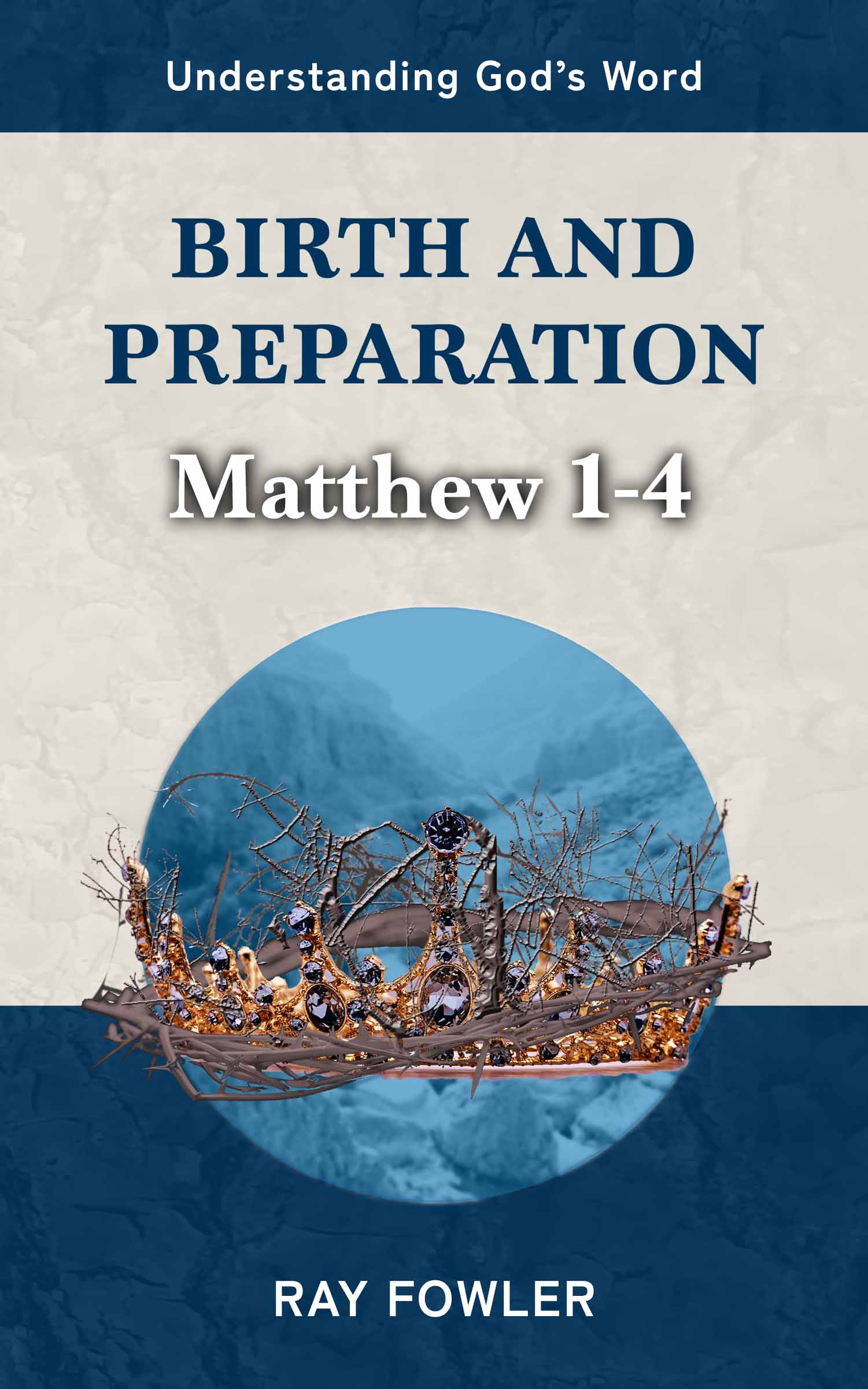
(Click image to see book on Amazon)
Matthew 2:1-12 (The Magi)
INTRODUCTION: It is Advent season, and we are following the story of Christ’s birth through these opening chapters of Matthew’s gospel. Today we come to the passage of the Magi bringing their gifts to Christ. It is a beautiful although mysterious passage, and an important part of the Christmas story as revealed in Scripture. (Read Matthew 2:1-2 and pray)
———————————————–
The story of the Magi raises all sorts of questions. Who were these mysterious men who came from the east? What was the star in the sky? How did they know what the star meant? What was God’s purpose in bringing them all the way to Bethlehem? We won’t be able to answer all these questions this morning, but I trust we will gain a greater appreciation for the Magi and their part in the Christmas story.
One of the main things the story of the Magi teaches us is that not everyone responds to Jesus in the same way. After reading the genealogy of Christ, and then learning about the birth of Christ, you would think that everyone would come to Jesus to worship him. I wish it were so, but it was not true then, and it is not true today.
So many people miss out on Christmas, because they miss out on Jesus. As we learned earlier in this series, Matthew in his gospel especially presents Jesus as Messiah and King. Today we learn that true followers worship Jesus as Messiah and King. So, let’s look at the various responses to Jesus we find in our passage today.
I. Seeking Jesus as Messiah and King (1-2)
First, we meet the Magi who come seeking Jesus as Messiah and King. Look at verses 1 and 2 with me:
After Jesus was born in Bethlehem in Judea, during the time of King Herod, Magi from the east came to Jerusalem and asked, “Where is the one who has been born king of the Jews? We saw his star in the east and have come to worship him.” (Matt. 2:1-2)
In the very first verse, we are introduced to the three main characters or sets of characters in the narrative that follows. They are Jesus, Herod and the Magi. Let’s take a closer look at each of them in turn.
A. Jesus > born king of the Jews (Genesis 49:10)
First, we have Jesus. Last week we learned the “how” and the “why” of Jesus’ birth. How was Jesus born? He was conceived by the Holy Spirit and born of a virgin. Why was Jesus born? To save us from our sins. Now we learn the “where” of Jesus’ birth. Where was Jesus born? In Bethlehem in Judea.
Bethlehem is a tiny town six miles south of Jerusalem. It was known as the city of David and the birthplace of the coming Messiah. Bethlehem was in Judea which is important because the Scriptures foretold that the Messiah would come from Judah (Gen. 49:10).
Notice Jesus was born a king. He didn’t become a king. He was born a king. He was not born a prince or a king in waiting. He was already a king from the very moment of his birth. Augustus Van Ryn comments: “No earthly potentate is ever born a king. Such are born princes. But He was born a King, for no one ever was King before Him, nor shall be after Him. There will never be a King Jesus the Second.”
B. Herod > acting king of the Jews (Luke 1:5)
Next, we have Herod. There are a number of Herods in history; this is Herod the Great who ruled from 40 B.C. to 4 B.C. He was called “the Great,” not because he was a great person, but because he was a great builder. He built the city of Caesarea. He built the new walls of Jerusalem. He built the magnificent new temple in Jerusalem. He may have been a great builder, but he was a terrible king. He was paranoid. He was cruel. He even murdered members of his own family.
We will learn more about Herod next week, but for now I want you to realize that he should never have been king of the Jews. First of all, he wasn’t even a Jew! He was an Edomite who pushed and manipulated his way into the kingdom. Secondly, he was far more aligned with Roman interests than with Jewish interests.
So, we are introduced to two kings in these opening verses: Herod who is the acting king of the Jews, and Jesus who was born king of the Jews.
C. The Magi > pagan Gentiles from the East (Numbers 24:17; Isaiah 60:3; Jeremiah 29:13; Matthew 7:7, 28:19)
Thirdly, we come to the Magi. The Magi were magicians or astrologers who studied the stars and interpreted dreams. We find early instances of Magi in the book of Exodus with Moses and then again in the book of Daniel. Matthew tells us they were from the east, so they were most likely from Babylon or Persia. We are not told how many there were, but later traditions speak of either twelve or three.
The word Magi would have had a negative connotation for the Jewish people. These were not only pagan Gentiles, but they were magicians as well. They were sorcerers. They were the last people you would expect God to invite to the Messiah’s birthday party. But God often does the unexpected.
And what an invitation God sent them! Instead of a card in the mail, he sent a star in the sky to announce the birth of Jesus. Notice the Magi call it “his star.” It is Jesus’ star. Jesus created all things, and all things belong to him. This was a special star that pointed directly to Christ.
People sometimes wonder whether the star was a natural or a miraculous phenomenon. Some say a comet, some say a supernova, some say a conjunction of Jupiter and Saturn. If that were the case, then God worked a miracle of timing in having it point to Christ. Others believe it was a miraculous light that God put in the sky. All we know for certain is that something unusual caught their attention, and they connected it with the birth of Christ.
You might wonder how they knew the star was connected with Christ. Remember, the Jews had been exiled to Babylon, and when they went, they brought their Scriptures with them. And so, their prophecies of the Messiah would have been become known in Babylon and Persia. The Magi were readers. They studied scrolls, so they would have read and studied the Hebrew Scriptures.
Perhaps the Magi focused on the prophecy of Numbers 24:17 which said: “A star will come out of Jacob; a scepter will rise out of Israel.” This prophecy connected a star with a ruler who would rise out of Israel. This prophecy was made by another famous Magi himself, a man named Balaam who lived back in Moses’ time.
But however they knew, the star signaled to them that the Messiah had been born, and so they came to Jerusalem, the political and religious center of Israel. In doing so, they may not have known it at the time, but they were partially fulfilling a prophecy of Isaiah which said of Zion: “Nations will come to your light, and kings to the brightness of your dawn” (Isa. 60:3).
God promises in the book of Jeremiah: “You will seek me and find me when you seek me with all your heart” (Jer. 29:13). Later on, Jesus said: “Seek and you will find; knock and the door will be opened to you” (Matt. 7:7).
The Magi came seeking Jesus, and they found him. It’s interesting, Matthew’s gospel ends with the gospel invitation going out to all the nations (Matt.28:19). Here it begins with a gospel invitation for the nations to come to Christ.
Notice why the Magi came. They simply said, “We have come to worship him.” Worship is the main theme of our whole passage today. It appears in all three sections of the passage. The Magi believed that this child was the Messiah who had been promised so long ago, and they came to worship him as Messiah and King.
II. Rejecting Jesus as Messiah and King (3-8)
So, in verses 1-2 we have the example of the Magi seeking Jesus as Messiah and King. Next in verses 3-8 we have the example of Herod and the religious leaders rejecting Jesus as Messiah and King. Here we find three characteristics of people who reject Jesus as the Christ. As we walk through this section together, we would do well to examine our own lives to make sure that none of these characteristics apply to ourselves.
A. Disturbed by Jesus instead of drawn to him (Acts 4:2)
First of all, those who reject Jesus as Messiah and King are disturbed by Jesus instead of drawn to him. Look at verse 3 with me now:
When King Herod heard this he was disturbed, and all Jerusalem with him. (Matt. 2:3)
The Magi didn’t go straight to Herod but started asking around. Word soon got to the king, and Herod was disturbed along with the rest of Jerusalem. This sets up another major theme in the gospel of Matthew: the rejection of Jesus by his own people in contrast to his acceptance by the Gentiles.
All of Jerusalem was disturbed at the news of Jesus’ birth. And this was not a one-time response. We read later on in the book of Acts about the people of Jerusalem and their religious leaders: “They were greatly disturbed because the apostles were teaching the people and proclaiming in Jesus the resurrection of the dead” (Acts 4:2).
Many people are still disturbed by Jesus today. They don’t want to hear his name. They certainly don’t want to acknowledge him as Lord. Some don’t even want you to mention him at Christmas!
How about you this morning? Are you disturbed by Jesus? Or drawn to him? There’s a big difference! That’s the first characteristic of people who reject Jesus as Messiah and King. They are disturbed by Jesus instead of drawn to him.
B. Knowledge of Christ without coming to him (John 5:39-40)
Secondly, those who reject Jesus as Messiah and King have knowledge of Christ without coming to him. Look at verse 4 with me next:
When he had called together all the people’s chief priests and teachers of the law, he asked them where the Christ was to be born. (Matt. 2:4)
Herod orders an assembly of the Sanhedrin. He calls them all together and asks them where the Christ was to be born. Christ is simply another word for Messiah. Herod is no dummy. He understands that this one who is born king of the Jews is the Messiah. He knows the Magi are talking about the Christ, and so he asks the religious leaders where the Christ was to be born.
They tell him the location, and then they quote from the prophet Micah in the Old Testament (Mic. 5:2). Look at verses 5-6 next:
“In Bethlehem in Judea,” they replied, “for this is what the prophet has written: ‘But you, Bethlehem, in the land of Judah, are by no means least among the rulers of Judah; for out of you will come a ruler who will be the shepherd of my people Israel.’” (Matt. 2:5-6)
Yes, Bethlehem was a tiny town, but it was not unimportant, because the Messiah would come from there. The Messiah would be a shepherd king who would rule over his people. The shepherd language is also drawn from the prophet Micah (Mic. 5:4) and described what kind of a king he would be. This king would be a shepherd who would guide, protect and care for his people—the exact opposite of King Herod!
When Herod asked the religious leaders where the Christ was to be born, they went straight to the Scriptures to give him the answer. In other words, their rejection of Jesus was not based on ignorance of the Scriptures. They knew exactly where the Christ was to be born.
It is possible to have knowledge of Christ without coming to Christ. Jesus would later tell the religious leaders: “You diligently study the Scriptures because you think that by them you possess eternal life. These are the Scriptures that testify about me, yet you refuse to come to me to have life” (John 5:39-40).
You can know all about Jesus and the Bible, but unless you come to him in faith believing, you will never have the benefit of knowing Christ personally. It is possible to have knowledge of Christ without coming to Christ.
C. Hypocrisy or deceit (Matthew 7:21-23)
1) Those who reject Jesus as Messiah and King are disturbed by Jesus instead of drawn to him. 2) Those who reject Jesus as Messiah and King have knowledge without coming to Christ. And then, finally 3) Those who reject Jesus as Messiah and King are often guilty of hypocrisy or deceit. Look at verses 7-8 with me now:
Then Herod called the Magi secretly and found out from them the exact time the star had appeared. He sent them to Bethlehem and said, “Go and make a careful search for the child. As soon as you find him, report to me, so that I too may go and worship him.” (Matt. 2:7-8)
Herod wanted to know the exact time the star had appeared because he was trying to determine the age of his competitor. How old was this new king? Was he a few months old? A few years? How long ago did this star appear anyway??
Herod tells the Magi to make a careful search. He is not happy about any of this. He wants the child found, and he wants him found now. He tells the Magi to report back to him so that he too can go and worship him. This is nothing but hypocrisy and deceit. Herod has no interest in worshiping the child. The Magi have worship in their hearts, but Herod has murder in his heart.
Jesus warned about those who would pretend to follow him but not really worship him. He taught: “Not everyone who says to me, ‘Lord, Lord,’ will enter the kingdom of heaven, but only he who does the will of my Father who is in heaven. Many will say to me on that day, ‘Lord, Lord, did we not prophesy in your name, and in your name drive out demons and perform many miracles?’ Then I will tell them plainly, ‘I never knew you. Away from me, you evildoers!’” (Matt. 7:21-23).
Jesus’ point is clear. Not all who call themselves Christians belong to Christ. Not all who go to church come to Christ. Not all who address Jesus as Lord worship Christ.
Neither Herod nor any of the people in Jerusalem bothered to walk the six miles to Bethlehem to find Jesus. They were disturbed by Jesus instead of drawn to him. They had knowledge of Jesus without coming to him. Herod practiced hypocrisy and deceit. These are some of the characteristics of people who reject Jesus as Messiah and King.
III. Worshiping Jesus as Messiah and King (9-12)
We have looked at the Magi who came seeking Jesus. We have looked at Herod and the religious leaders who rejected Jesus. Finally, let us look at the example of the Magi as they come and worship Jesus. And in looking at their example, we find three characteristics of those who worship Jesus as Messiah and King.
A. Rejoicing in Christ (1 Peter 1:8-9)
First of all, when you worship Jesus as Messiah and King, you will rejoice in Christ. Look at verses 9-10:
After they had heard the king, they went on their way, and the star they had seen in the east went ahead of them until it stopped over the place where the child was. When they saw the star, they were overjoyed. (Matt. 2:9-10)
By God’s sovereign power the star continued to point the way until it stopped over the place where the child was. Matthew uses the word “child” here instead of “baby.” It shows that some time has past, and Jesus is no longer a baby in the manger but rather a child in a house.
When they saw the star stop, they were overjoyed. This phrase is actually a combination of four words in the Greek which could be translated: “They rejoiced with exceeding great joy.” So, they rejoiced with joy! And not just with joy, but with great joy. And not just with great joy, but with exceeding great joy! Matthew uses an abundance of terms to describe their overwhelming joy at finding Christ.
Those who worship Jesus as Messiah and King rejoice in him. The book of 1 Peter describes this joy when it says: “Though you have not seen him, you love him; and even though you do not see him now, you believe in him and are filled with an inexpressible and glorious joy, for you are receiving the goal of your faith, the salvation of your souls” (1 Peter 1:8-9). True worship of Christ always leads to rejoicing in Christ.
B. Giving your all for Christ (Matthew 13:44-46)
Secondly, when you worship Jesus as Messiah and King, you give your all to Christ. Look at verse 11 next:
On coming to the house, they saw the child with his mother Mary, and they bowed down and worshiped him. Then they opened their treasures and presented him with gifts of gold and of incense and of myrrh. (Matt. 2:11)
The Magi find Jesus and Mary at a house, which is another indication that we are no longer at the manger. Notice Jesus is mentioned before Mary. The focus is all on the child. The Magi were looking for the child. Herod is looking for the child. The star stops over the place where the child was. The focus is all on Jesus just as it should be.
The Magi approach Christ. They bow down and worship him. This is the appropriate response when you come before Jesus—to bow down and worship. They open their treasures (the word can mean “treasure chests”), and they present Jesus with the most expensive and lavish of gifts, exactly the type of gifts appropriate for a king. They give him their all. They give him their best.
Many interpreters have found symbolic meaning in the gifts presented to Christ. Gold is a symbol of royalty; Jesus was born a king. Incense is a symbol of deity; Jesus is the Son of God. Myrrh is a symbol of suffering and death; Jesus came to die on the cross for our sins. The Christmas carol “We Three Kings” wonderfully sums up all three when it describes Jesus as “King and God and Sacrifice.”
When you worship Jesus as Messiah and King, you give him your all. Jesus spoke about this in his parables of the treasure and the pearl. He said: “The kingdom of heaven is like treasure hidden in a field. When a man found it, he hid it again, and then in his joy went and sold all he had and bought that field. Again, the kingdom of heaven is like a merchant looking for fine pearls. When he found one of great value, he went away and sold everything he had and bought it” (Matt. 13:44-46).
Worship means that something is worth it! Trust me, Jesus is worth everything. When you worship Jesus as Messiah and King, you give your all to Christ.
C. Following Christ (Matthew 7:13-14; John 14:6)
And then finally when you worship Jesus as Messiah and King, you commit yourself to following Christ. Look at verse 12:
And having been warned in a dream not to go back to Herod, they returned to their country by another route. (Matthew 2:12)
God warned them, and they obeyed. They returned to their home by another way. When you worship Christ, you will also find yourself going another way. Jesus said: “Enter through the narrow gate. For wide is the gate and broad is the road that leads to destruction, and many enter through it. But small is the gate and narrow the road that leads to life, and only a few find it” (Matt. 7:13-14).
When you worship Jesus as Messiah and King, you switch paths. You can’t walk in the old ways anymore. You are a new creation in Christ. And what is the way God calls you to follow? Jesus said: “I am the way and the truth and the life. No one comes to the Father except through me” (John 14:6). Jesus is the way to the Father, and that’s why we must follow him. When you worship Jesus as Messiah and King, you commit yourself to following Christ.
CONCLUSION: Jesus is Messiah and King, and true followers will worship him as such. The Magi were pagan Gentiles, but they came seeking Jesus to worship him. Herod and the religious leaders rejected Jesus, showing they were not true followers. Jesus is the only way to the Father, and worshiping God includes rejoicing in Christ, giving him your all, and following Jesus wherever he leads you.
Someone might object, “But I don’t have any fancy gifts to give like the Magi. I don’t have gifts worthy of a king.” I would point you to the last stanza of Christina Rossetti’s beautiful poem, “A Christmas Carol” where she writes:
What can I give him, poor as I am?
If I were a shepherd, I would bring a lamb;
If I were a Wise Man, I would do my part;
Yet what can I give him: give him my heart.
Of course, the greatest gift at Christmas is not what we give to Jesus but what God gave to us—the gift of his own Son wrapped in the flesh of a baby. Our own gifts pale before God’s amazing gift. In fact, it is only because of God’s gift to us that we can offer our gifts to him. Jesus is the real gift of Christmas, and that is why we worship him.
The Magi traveled all the way to Bethlehem for one reason and for one reason only—to worship Christ, the newborn King. That is what Christmas is all about, and if we miss this, we miss everything.
When you seek Christ, you will find him. When you find him, you will worship him. And when you worship him, your life will be changed forever. True followers worship Jesus as Messiah and King. Will you worship him today?
© Ray Fowler
You are permitted and encouraged to reproduce and distribute this message provided that you do not alter the wording in any way and that you do not charge a fee beyond the cost of reproduction. For any web postings, please link to the sermon directly at this website.
Please include the following statement on any distributed copies:
By Ray Fowler. © Ray Fowler. Website: https://www.rayfowler.org
Click here for more Christmas messages.
Click here for more messages from the book of Matthew.
Click here for more messages from The Birth of the King series.
Click here to return to the Sermons page.
Recent Discussion