


Birth Announcement for the Ages
Click here for more Christmas messages.
Click here for more messages from the book of Matthew.
Click here for more messages from The Birth of the King series.
Click here to return to the Sermons page.
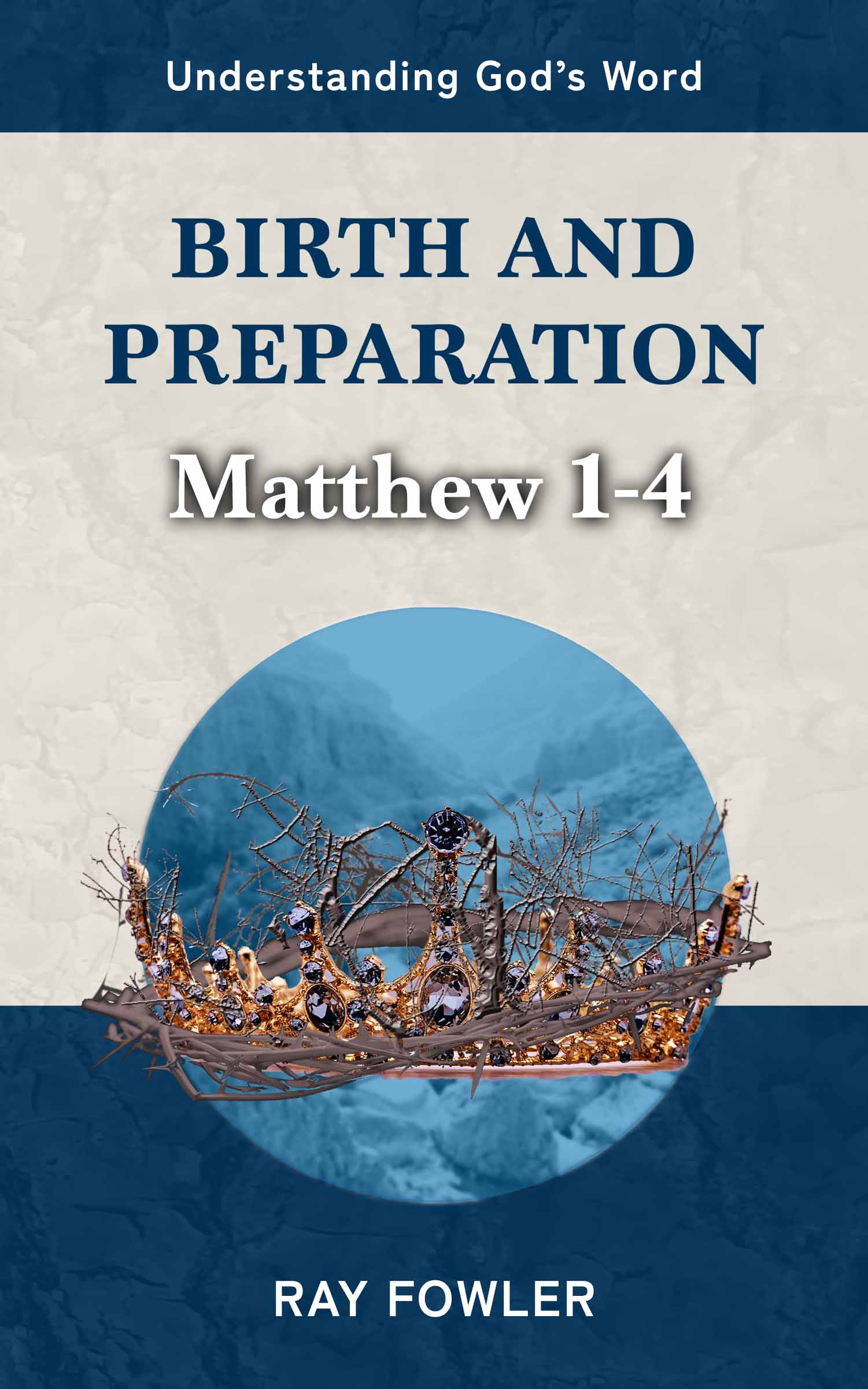
(Click image to see book on Amazon)
Matthew 1:18-25 (Jesus’ birth)
INTRODUCTION: It is Advent season, and we are following the story of Christ’s birth through these opening chapters of Matthew’s gospel. Matthew especially presents Jesus as Messiah and King, and so we have appropriately called this series, “The Birth of the King.” Last week we looked at Jesus’ genealogy, and today we come to his birth. (Read Matthew 1:18-21 and pray.)
—————————————
Our first-born son, Ramón, was born on Friday, September 27, 1991 at 3:08 in the morning. This was in the days before the internet, email and Facebook, so we had to send out our birth announcements the old-fashioned way—by mail! We had already designed an announcement on the computer with blank spaces for the baby’s name, date of birth, weight, length, and the announcement of “It’s a boy!” or “It’s a girl!” We had also stocked up on plenty of pink and blue paper, so we were ready either way.
Around 6:00 a.m. that morning, I swung by our home, printed out a bunch of birth announcements on blue paper, stuffed them into our pre-stamped and pre-addressed envelopes, and dropped them off at the post office on the way back to the hospital. The post office delivered them that morning, and by 11:00 a.m. on September 27, 1991, people were already reading that Ramón had been born earlier that day.
We were so excited about Ramón coming into the world that we wanted to announce his birth to everyone. We wanted everyone to know as soon as possible. For us it was the birth announcement of the year!
In our passage from Matthew this morning, we also have a birth announcement. But this was not just a birth announcement for the year. It was a birth announcement for the ages! In verse 18 Matthew tells us: “This is how the birth of Jesus Christ came about.” The word “Christ” in this verse means Messiah. Remember, Matthew’s gospel especially presents Jesus as Messiah and King, and so Matthew is telling us how the birth of Jesus, the promised Messiah, came about.
One of the things you will notice about Jesus’ birth is that it was miraculous from start to finish. This was no ordinary birth. It was a miracle of incarnation. It was a miracle of God’s love for us. As we study this passage, we will see there are at least three miracles related to Jesus’ birth. God miraculously came to earth through Jesus to save us from our sins. This was indeed a birth announcement for the ages!
I. Joseph’s dilemma (18-19)
So, how did Jesus’ birth come about?
A. Mary pledged to be married to Joseph
It begins, appropriately enough, with a love story. Look at verse 18:
This is how the birth of Jesus Christ came about: His mother Mary was pledged to be married to Joseph, but before they came together, she was found to be with child through the Holy Spirit. (Matt. 1:18)
There were three steps to a Jewish wedding in those days. First there was the engagement period, which often began with the parents arranging the marriage while the spouses were still children. Next came the betrothal period. During the betrothal period you were considered husband and wife legally, even though you did not yet live together as husband and wife, and you had no sexual relations with each other. Betrothal was a legally binding relationship lasting an entire year which could only be broken by divorce. And then finally, after the year of betrothal the couple would get married and begin to live together as husband and wife.
So here we have a young couple in their betrothal period. They have probably been engaged most of their lives, but now they have taken that next step of betrothal. They have made the upcoming wedding official. Even though they are not officially married yet, they are still considered husband and wife.
B. Mary found with child through the Holy Spirit (Luke 1:35)
This should have been a happy time of planning and preparation, but suddenly Joseph was thrown off track. Matthew tells us that Mary was found to be with child through the Holy Spirit. Now Joseph didn’t know about the Holy Spirit part. All he knew was that Mary was with child.
You may remember from our study of Jesus’ genealogy that each of the women included in the genealogy had a questionable background. Suddenly Joseph’s whole relationship with Mary is thrown into question. And the big question here is: “Who is the father of this baby?”
Joseph knows it’s not him, although that’s probably what everyone else thought. Matthew tells us that this happened before they came together, which means before they had sexual relations. But if it’s not Joseph, then who? What was merely hinted at last week in the genealogy becomes clear here. Jesus has no human father. Mary is a virgin, and Jesus was conceived by the Holy Spirit (see Luke 1:35).
And so, we have the first miracle surrounding Jesus’ birth—Jesus was born of a miraculous conception. God miraculously came to earth through Jesus to save us from our sins.
C. Joseph had in mind to divorce her quietly (Deuteronomy 22:23-24)
Of course, Joseph didn’t know any of this, so what was he to do? As far as he knew Mary had been unfaithful to him. Because they were already considered husband and wife, this unfaithfulness amounted to adultery—an offense which was punishable by death if Joseph chose to press charges (Deut. 22:23-24).
So, Joseph was faced with a dilemma, and with the limited information he had at hand, he made the very best decision he could considering the circumstances. Look at verse 19:
Because Joseph her husband was a righteous man and did not want to expose her to public disgrace, he had in mind to divorce her quietly. (Matt: 1:19)
Joseph was a righteous man, which means he followed God’s law. If Mary had been unfaithful to him before marriage, then he had every right to press charges. But he was not just a righteous man. He was also a good man. Yes, he upheld the law, but he also showed mercy to Mary. He could have thrown the law at her, but he did not want to expose her to public disgrace. He didn’t want to make an example of her.
And so, Joseph chose not to press charges against Mary. He chose not to have a public court hearing. He didn’t want her to suffer any harm. Instead, he had in mind to divorce her quietly. He would divorce her before the minimum number of witnesses, which was two. He would not press charges. He would simply give her a written certificate of divorce and send her on her way.
II. Joseph’s dream (20-23)
But that’s when God intervened for the second time in this story. An angel of the Lord appeared to Joseph in a dream. This was now the second miracle surrounding Christ’s birth—the miracle of the angelic announcement. Once again, God miraculously came to earth through Jesus to save us from our sins.
A. Conceived by the Holy Spirit
The angel appears to Joseph and has two commands for him. First, he is to take Mary home as his wife. Look at verse 20:
But after he had considered this, an angel of the Lord appeared to him in a dream and said, “Joseph son of David, do not be afraid to take Mary home as your wife, because what is conceived in her is from the Holy Spirit.” (Matt. 1:20)
A couple things here. First, notice the angel addresses Joseph as “son of David.” This is key here. It means that Joseph is directly descended from David, and that he is in the royal line of kings—just as we saw from the genealogy last week. Remember, Matthew began the genealogy by calling Jesus “the son of David.” Now the angel reminds us that Joseph, Jesus’ adoptive father, is also a son of David.
The angel tells Joseph what we already learned earlier in the passage. Mary is still a virgin. She has not been unfaithful. God has worked a miracle in her life. What is conceived in her is from the Holy Spirit. Mary already knew this. The angel had told her in advance. Now the angel tells Joseph after the fact what has taken place.
This is a miracle birth even beyond the miracle birth of Isaac or any of the other miracle births in the Old Testament. God brought Jesus into the world without the help of a human father. Jesus’ birth was all of God to show us that salvation is all of God. God brought it about through the Holy Spirit, and so it was also a holy conception in every way.
B. A son named Jesus who will save from sin (Psalm 130:8)
The angel’s second command for Joseph is found in verse 21:
“She will give birth to a son, and you are to give him the name Jesus, because he will save his people from their sins.” (Matt. 1:20-21)
Jesus was a popular boy’s name at the time. It’s the same as the Hebrew name “Joshua” which means “God saves.” Every little Jesus or Joshua running around in Joseph and Mary’s time was a daily reminder that God had saved his people in the past, and he would come to save them again in the future.
But Jesus would infuse this name with new meaning. Joseph was to give this boy the name Jesus, because he will save his people from their sins. And so, Jesus’ name has great significance. It was a prophecy of what he would do. It looked forward to the cross when Jesus would die for our sins.
The Old Testament spoke of a time when God himself would come and save his people from their sins. Psalm 130 says: “He himself will redeem Israel from all their sins” (Ps. 130:8). What the Old Testament said God would do, the New Testament tells us Jesus would do. That’s a pattern we find throughout the New Testament. Over and over we are told that what God does, Jesus does also. Jesus as the Son of God is truly God himself.
Psalm 130 said that God would redeem Israel from all their sins. But now God’s people would include all who put their trust in Jesus—Jew and Gentile together. Remember what we learned from the genealogy last week. Jesus’ genealogy included both Jews and Gentiles, foreshadowing his salvation of Jew and Gentile together. Jesus is a Savior for all who believe in him.
C. Immanuel – “God with us” (Isaiah 7:14; John 1:1,14)
And then Matthew draws us all the way back to Old Testament prophecy to show us that this was God’s plan all along. Look at verses 22-23:
All this took place to fulfill what the Lord had said through the prophet: “The virgin will be with child and will give birth to a son, and they will call him Immanuel” – which means, “God with us.” (Matt. 1:22-23)
Here we have another name that is prophesied for Christ, but unlike the name Jesus, this is not a common name. He will be called Immanuel, which means “God with us.” Only God can save from sins, and Matthew shows us that this child to be born is indeed both God and man.
Matthew is quoting from the prophet Isaiah 7:14. This is a prophecy that was made more than seven hundred years before Jesus was even born. The original prophecy was made to King Ahaz of Israel. It spoke about deliverance in his time. The prophecy instructed him not to look to earthly help, but to God alone for deliverance.
But now Jesus would bring about an even greater deliverance—not a deliverance from foreign nations this time but a deliverance from sin. The prophecy of Immanuel is not simply “God with us” as our helper (as it was with Ahaz), but “God with us” embodied in the very person of Jesus Christ.
We find this elsewhere in the Bible The gospel of John tells us that Jesus was with God in the beginning and that he was God (John 1:1. But then John goes on to tell us that Jesus “became flesh and made his dwelling among us” (John 1:14). So, at Christmas Jesus went from being “God with God” to “God with us.”
Jesus was given two names at his birth: Immanuel and Jesus. And these two names perfectly describe the person and work of Christ. Who is the person of Christ? He is Immanuel. He is God with us, fully God and fully man. And what is the work of Christ? He is Jesus who will die on the cross to save his people from their sins.
This was the third miracle in relation to Jesus’ birth—the miracle of fulfilled prophecy. Once again, God miraculously came to earth through Jesus to save us from our sins.
III. Joseph’s decision (24-25)
So, first Joseph had a dilemma—what should he do about Mary? Then, he had a dream where God gave him two commands—to take Mary home as his wife and to name the boy Jesus. Now he had a decision to make. And it was not an easy decision. If Joseph obeyed these two commands, he was opening himself up to a lifetime of suspicion and ridicule.
A. Took Mary home as his wife
So, what did he do? Look at verses 24-25:
When Joseph woke up, he did what the angel of the Lord had commanded him and took Mary home as his wife. But he had no union with her until she gave birth to a son. And he gave him the name Jesus. (Matt. 1:24-25)
When someone messes up at something today, we often jokingly say, “You had one job!” Well, Joseph had two jobs! And he did them both admirably. It was the moment of decision, and Joseph decided to obey. It’s interesting, we never get to hear Joseph speak in the New Testament. There are no words of Joseph recorded for us, but again and again we see him respond in obedience to God’s commands. This simple, direct, immediate obedience is a hallmark of Joseph’s character.
When God gives you a command, you also come to a moment of decision. As with Joseph, God may ask you to do some things that will not be easy for you to do. But God’s way is always best, and Joseph is a wonderful example of obedience for us to follow.
B. Had no union with her until she gave birth (Matthew 13:55-56)
Joseph took Mary home as his wife. They were officially married now, which means they could legally and morally begin having sexual relations, but Matthew tells us that Joseph had no union with her until she gave birth to Jesus.
Some people teach that Joseph and Mary never had sexual relations, but that’s not what Matthew says here. The Bible tells us that Jesus had brothers and sisters (Matt. 13:55-56). Matthew doesn’t say they never had sexual relations. He only says that they abstained until Jesus was born.
C. Gave him the name Jesus
Joseph obeyed the first command and took Mary home as his wife. And then, after Jesus was born, he obeyed the second command. He gave him the name Jesus. By naming him, Joseph became the legal father of Jesus. He adopted him as his own son, thus passing on to him the legal right of kings through his own Davidic bloodline. Joseph was a son of David, and Jesus would be known as the Son of David—all because Joseph obeyed the angel. He took Mary home as his wife, and he named the boy Jesus.
CONCLUSION: How did the birth of Jesus come about? It was a miracle! It was miraculous in its conception, it was miraculous in the angel’s announcement, and it was miraculous in the prophecy that it fulfilled. Let me share with you three applications from our passage in closing.
1) Stand in awe of our miracle-working God! If God can bring forth a child from a virgin, he can do anything! Nothing is impossible for God. You can trust him with all things.
2) If you don’t know Jesus as your Savior, will you come to him today? Jesus came to save his people from their sins, which means if you want to be saved from your sins, you need to become a part of his people. You do that by trusting in Jesus’ saving work for you on the cross. He died for you so that your sins might be forgiven.
3) Good news is for sharing! God came to earth as a man to die on the cross for sins. There is no greater news than that. People are more open at Christmas than any other time of the year to hear about Jesus or to come to church. Who will you share Jesus with this Christmas season? Who will you invite to come to church with you to hear about Jesus?
When our son, Ramón, was born we sent out those announcements because we wanted all our friends and family to know about his birth. We wanted them all to know that “Ramón was with us.”
But Jesus’ birth is for all people at all times. Jesus is Immanuel. He is “God with us!” God miraculously came to earth through Jesus to save us from our sins. His was a birth announcement for the ages!
© Ray Fowler
You are permitted and encouraged to reproduce and distribute this message provided that you do not alter the wording in any way and that you do not charge a fee beyond the cost of reproduction. For any web postings, please link to the sermon directly at this website.
Please include the following statement on any distributed copies:
By Ray Fowler. © Ray Fowler. Website: https://www.rayfowler.org
Click here for more Christmas messages.
Click here for more messages from the book of Matthew.
Click here for more messages from The Birth of the King series.
Click here to return to the Sermons page.
Recent Discussion